
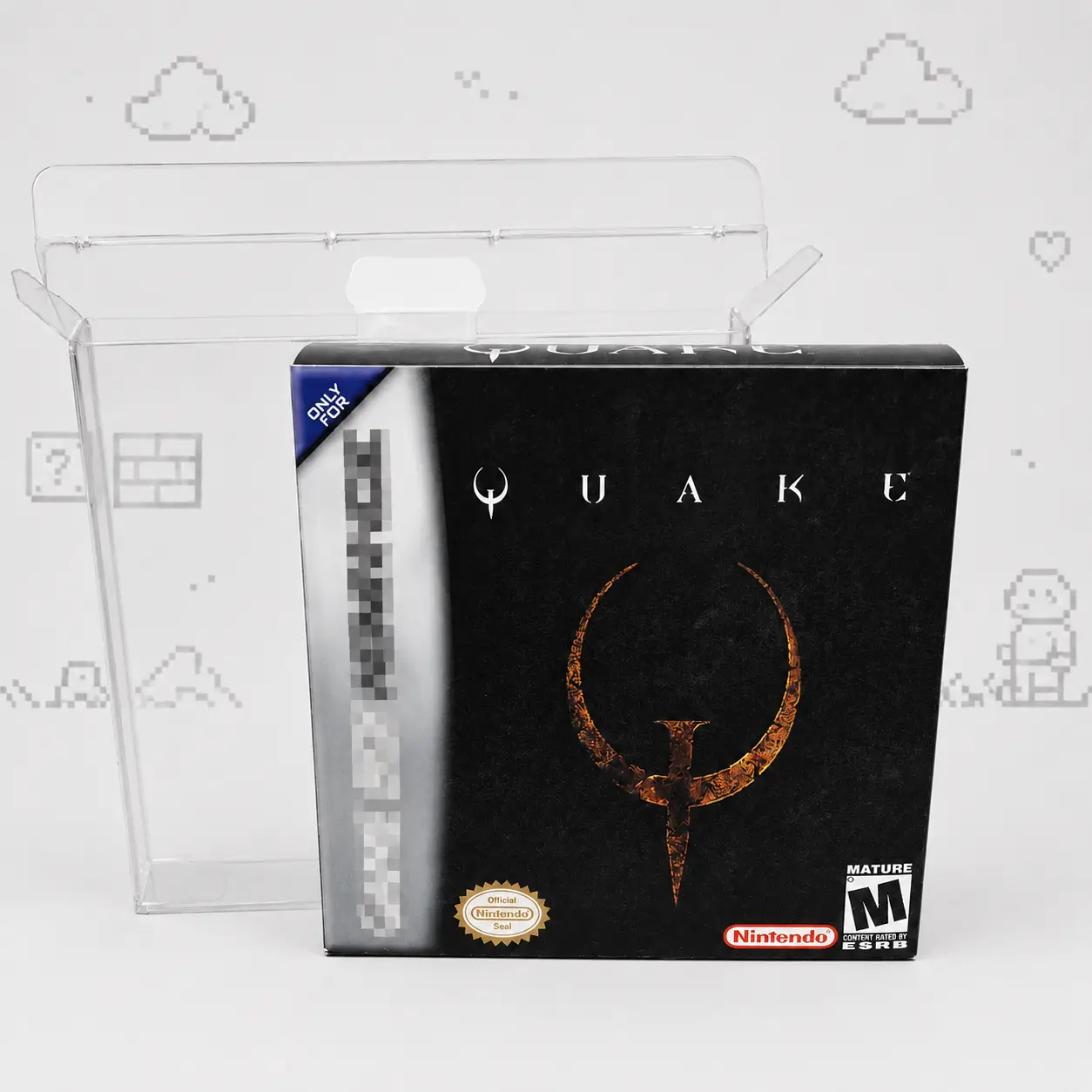
Quake on a Handheld Without a 3D Chip: Randy Linden's GBA Experiment
When id Software's Quake arrived in 1996, it needed a capable PC. Making it run on a Game Boy Advance, a handheld with no 3D hardware, sounds close to impossible, and that was the challenge Canadian programmer Randy Linden took on in 2002. He was already known for his Super NES port of Doom, a conversion built on a custom engine rather than the original code.
At a glance
- Based on: Quake (id Software, 1996)
- Created by: Randy Linden
- Released: never in its time; the prototypes were dumped in June 2022
- Genre: First-person shooter
- What sets it apart: a technical demo that was pitched to publishers and never turned into a product
How it came about
- Linden began the Game Boy Advance work in 2002 as a demonstration to attract a publisher.
- The first level, E1M1, was reimplemented using roughly 200,000 lines of ARM7 assembly, according to his biography.
- He pitched the port to id Software, which turned it down. No publisher stepped in.
- He kept improving the demo, adding better animation, point lighting and camera work, and handling the underwater sections, for a second pitch.
- The project stayed unreleased until prototypes of it were dumped in 2022, after he found his work on a flash drive.
Why it is worth owning
This is a pitch demo rather than a finished game, so read it as a piece of programming history: an attempt to coax a recognisable Quake out of a console with no 3D hardware, by a developer who could not get it onto shelves.