
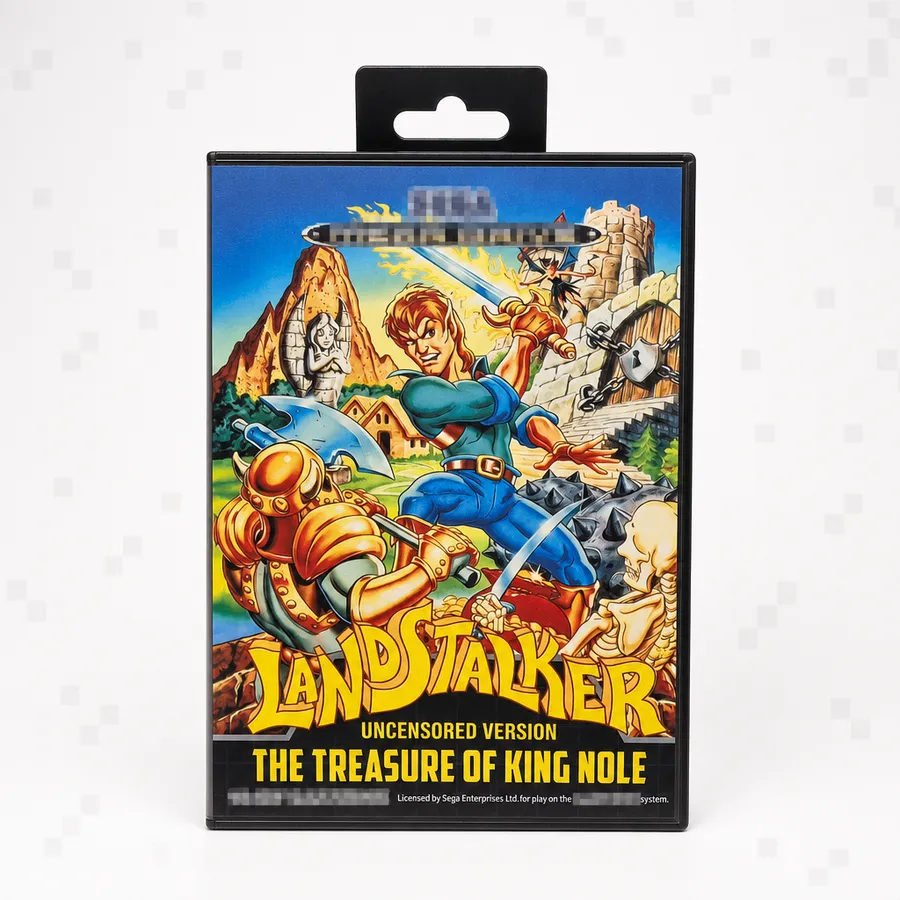
Landstalker, Restored: A Director's Cut of Climax's Isometric Treasure Hunt
When Sega released Landstalker: The Treasures of King Nole in Japan on 30 October 1992, it set Climax Entertainment's isometric action RPG apart with a mix of swordplay, jumping and block puzzles. Nigel, an elf-eared treasure hunter, explores towns, outdoor areas and dungeons in search of King Nole's hidden fortune. Western releases followed in October 1993 (North America) and November 1993 (Europe). The game was a critical and commercial success and sold around 160,000 copies in Japan alone.
At a glance
- Based on: Landstalker: The Treasures of King Nole (Sega Mega Drive / Genesis, 1992)
- Created by: Climax Entertainment (original); this edition is a community-made English version
- Released: original in 1992; this fan-made edition is a later project
- Genre: isometric action role-playing game
- What sets it apart: English text that keeps content restored from the Japanese original
What changes in the Director's Cut
Western versions were altered from the Japanese release, and the usual examples are a bath scene at Mercator Castle and some suggestive items. According to the product description, this edition puts the uncensored material back, restores the original Japanese sprites for the Oracle Stone, Spellbook and Shortcake items, and adds a control patch credited to the Mega Drive hacker M.I.J.E.T. for easier movement in the isometric world.
Why the controls matter
Landstalker asks you to jump across rooms in an isometric view, judging height and distance on a flat screen. Movement in that kind of game is a perennial talking point, which is what a control patch is meant to address.
Behind the original
Kenji Orimo directed and designed, Kan Naito programmed, and Motoaki Takenouchi composed the score. A Super Nintendo spin-off, Lady Stalker, followed in Japan in 1995, and Dark Savior and Alundra are often described as spiritual successors.